




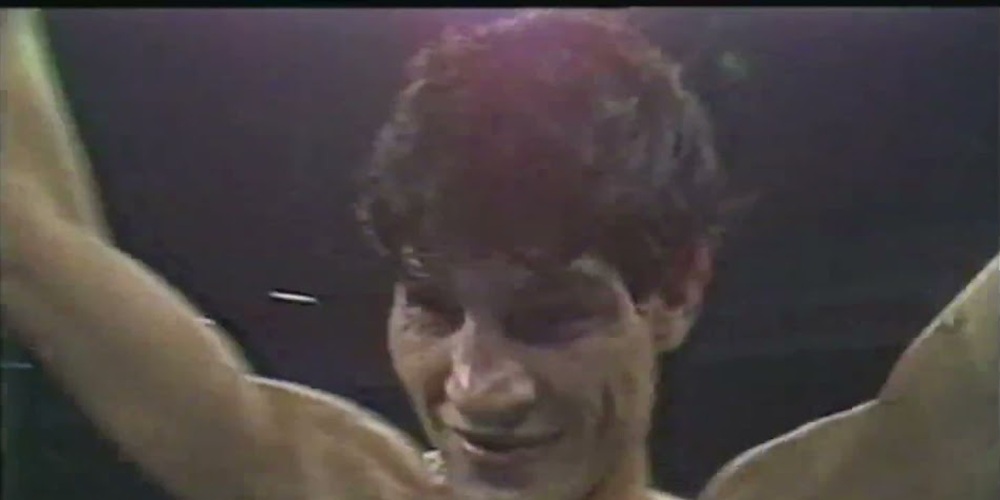
A long-limbed physique, explosive and lightning-fast punching power, an attacking style: Efisio Galici made Sardinia and all of Italy dream with his spectacular knockouts, before his career was cut short by an unexpected and likely unjust defeat. Today, “The Monzón of Villanova” turns 69. To celebrate the occasion, we got in touch with him to take a journey through his memories, retracing the key stages of his exciting sporting career.
At what age did you first enter a boxing gym, and what pushed you to take up this difficult sport?
I started at 21, and it was my uncle, the great Tonino Puddu, who convinced me. At the time I used to get into street fights, and he would tell me: instead of fighting in the streets, come to the gym and test yourself in the ring. In the end he convinced me, and that’s how my journey began.
Anyone who followed your career was struck by your devastating punching power. Was it something you discovered early on, or did you develop it gradually through training?
To be honest, it was something I had from the very beginning. Even before entering the gym, when I got into fights in the street, I only needed to throw one punch and I would “put them to sleep” (laughs, ed.). Commentators who covered my fights, like Rino Tommasi and Franco Ligas, called me “The Monzón of Villanova,” because they said I resembled Carlos Monzón, both in appearance and style. Villanova is the district of Cagliari where I grew up.
How many amateur fights did you have, and what made you turn professional?
I think around forty, maybe forty-two. I turned professional to earn a living. That’s why almost everyone turns pro. As an amateur I still had my satisfactions: even though I started boxing late, I made it into the national team, where I took the place of Romolo Casamonica at welterweight. I even beat him in an amateur bout at the Italian championships, although I didn’t win the tournament because I was robbed in a fight against a Tuscan boxer. In any case, the Branchini family noticed me, and since I was already at the right age to turn professional, they made me a good offer and I accepted.
On July 12, 1986, you became Italian champion by knocking out Daniele Zappaterra in just two rounds. What can you tell us about that magical night?
What can I say? When I stepped into the ring, all I had in mind was: “Either I beat you up, or you beat me up—but I’d rather be the one doing the beating.” That was my motto and it perfectly described my fighting style. That night, like many others, it worked perfectly.
Winning the WBC international title and three consecutive defenses pushed you up the rankings. Did you ever dream of becoming world champion at that stage, or were you grounded?
I kept my feet on the ground, but at the same time I knew I had what it took to go far and compete with anyone. It’s no coincidence that the welterweight world champion Mark Breland refused to fight me. There were negotiations to organize the bout, but he chose another path and the deal never materialized.
On June 4, 1988, your rise was abruptly halted when Mauro Martelli beat you on points with a controversial decision in your hometown of Cagliari, denying you the European title. How many times have you watched that fight, and do you think you were a victim of injustice?
I’ve watched it many times, and I am convinced they robbed me. I think there was something behind it. He initially didn’t want to fight me, even though I was the mandatory challenger, but then they somehow convinced him, and I believe they reassured him that he would win. I also think they did something to me, because that night I wasn’t myself in the ring. I used to drink tea before every fight because it gave me an energizing effect. That day they asked me: “Aren’t you having your tea today?” and I replied sharply: “What the hell do you care if I drink tea?” Later, when I spoke about it with my uncle Tonino Puddu, he told me they pulled the same trick on him when he fought for a world title in the United States. That night I didn’t feel like myself, I was slow in my punches—they must have put something in my tea that weakened me. But even so, I believe I deserved the decision.
At the time of the Martelli fight you were only 31, but you never fought again. What made you retire? Do you regret not continuing your career?
No, I never regretted it, because what happened made me realize there was too much injustice in boxing. I told myself that if I had to fight to win only to be given the loss, it wasn’t worth it.
How did your life develop after your boxing career ended?
For a while I lived in Taiwan. I worked for a Milan-based company in the electromechanical sector. I visited factories, compared quotes based on orders from Milan, and decided where the goods should be manufactured. When the containers were loaded, I had to inspect them and apply the quality seal. I also acted as an inspector. When the containers arrived in Italy, the Guardia di Finanza would see the seal and know the shipment had already been checked and approved. But if they had opened the container and found goods different from the documents, I would have been responsible, so I had to be extremely careful.
I also tried to stay in boxing as a trainer, both at Fortunato Manca’s gym and at the Sardinian Boxing Academy, but I quickly realized that the young fighters weren’t truly interested in competing, so I gave it up.
Now I’m almost 70 and retired. Still, I’m happy that even today people recognize me in the street and remember what I did in the ring. Just this morning, while I was having breakfast, someone said to me: “I’ve seen you before.” I had never seen him, but he asked if I was Efisio Galici, and I said yes. Evidently, I left a good memory.