




New York, June 20, 1936. Yankee Stadium is still immersed in the silence of the morning after, yet the echo of Max Schmeling’s right cross reverberates from the front pages of newspapers around the world.
On the evening of June 19, boxing witnessed one of the most unexpected upsets of the century. The 31-year-old German, widely regarded as a former champion past his prime, scored a devastating twelfth-round knockout over Joe Louis, the then-undefeated Brown Bomber. For the 22-year-old fighter from Detroit, it was the first defeat of his professional career, an event that transcended the boundaries of sport and became a sort of political manifesto.
On the eve of the contest, Wall Street bookmakers had installed Schmeling as a 10-to-1 underdog. Confidence in a Louis victory was so overwhelming that bettors had to wager ten dollars on the American just to win one. The young African American represented the division’s new phenomenon, a fighter who had amassed 27 consecutive victories, 23 by knockout, and who embodied the social aspirations of Black America, which had lacked a true boxing icon since the days of Jack Johnson. Schmeling, by contrast, was portrayed by the American sporting press as a fading fighter, the final “bureaucratic” obstacle before Louis’ expected world title challenge against James Braddock.
What happened in the ring was simply the culmination of everything that had taken place beforehand. Louis approached training camp with unusual carelessness, indulging in lengthy golf sessions and frequent distractions in Hollywood. Revered and celebrated as the next great sensation of world boxing, he had been cast as a boxer in the film Spirit of Youth. Newly married, he devoted much of his time to his wife—and to other women as well. “The other girls buzzed around me like flies. Once Chappie [Blackburn, his trainer] grabbed a stick and chased them away. I found them anyway.” Becoming unusually complacent, he also overindulged at the dinner table and entered the ring far from peak condition.
Schmeling, on the other hand, trained with absolute discipline and fierce conviction. Beyond his physical preparation, he spent countless hours studying archive footage, meticulously analyzing his opponent’s style. The German had identified a structural flaw in Louis’ jab: after throwing it, Louis tended to drop his left hand, leaving his chin exposed. In his memoirs, Schmeling would later recall how that technical weakness was the perfect target for his finest weapon—the counter right hand. “Louis’ weakness matched my greatest strength perfectly,” Max later wrote. “Louis and I, so to speak, were made for each other.”
Fight night arrived. Approximately 42,000 spectators gathered at New York’s Yankee Stadium. Politicians, celebrities, and ordinary members of Harlem and the wider African American community had come to witness what most considered a mere formality. The atmosphere was electric, yet devoid of genuine tension, as the verdict seemed already written.
At the opening bell, Louis imposed his pace and superior speed, advancing behind his magnificent jab. Schmeling absorbed the blows without losing composure, protected by a high guard and constantly moving, patiently waiting for an opening. In the fourth round, the German’s prediction became reality. As Louis threw a jab and left himself exposed, a lightning-fast and powerful right hand from Schmeling crashed into the American’s face. Louis began staggering across the ring on shaky legs. Schmeling immediately pounced, unleashing a barrage of punches and sending him to the canvas for the first time in his professional career with a second devastating right hand.
From that moment onward, the momentum of the fight shifted dramatically. Louis, hampered by swelling around his left eye that impaired his vision, lost his composure and began throwing wild punches, some bordering on fouls. Schmeling maintained his distance, methodically dismantling his rival’s resistance, timing him perfectly and repeatedly landing the right hand that seemed like a death sentence. Ringside reports by Jack Miley described a bewildered Louis, unable to find strategic answers against an opponent who controlled every aspect of the fight. He continued to jab and often found the target, but Schmeling’s right-hand counters carried far greater impact.
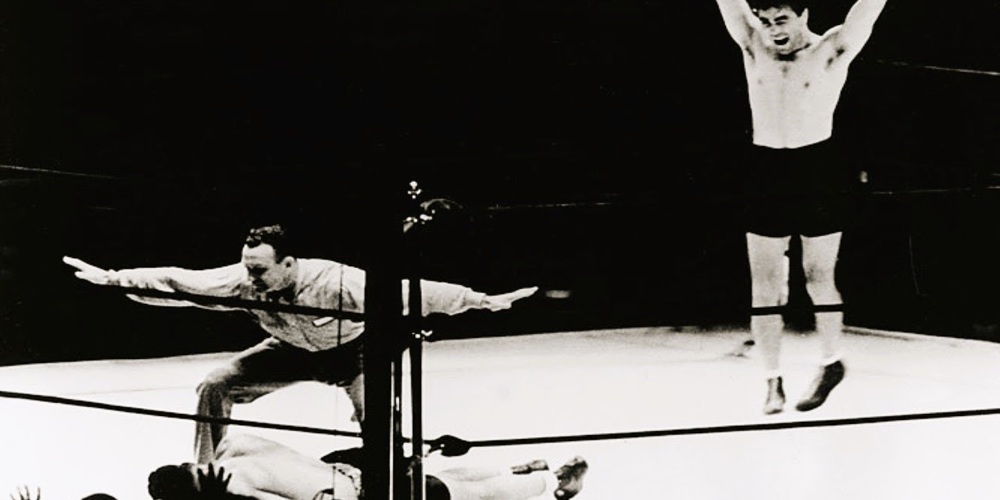
The end came in the twelfth round. A devastating sequence of right hands to the face shattered the American’s remaining resistance, and he collapsed to the canvas, unable to rise. An ecstatic Schmeling helped Louis back to his feet and escorted him to his corner before resuming his jubilant celebrations around the ring, creating an almost surreal scene.
Louis’ defeat was perceived as a form of collective mourning within the African American community, which viewed the fighter as a symbol of emancipation in an America still deeply scarred by racial segregation. Black newspapers such as the Pittsburgh Courier expressed profound disappointment while maintaining confidence in the athlete’s eventual redemption.
Schmeling’s victory also extended far beyond the sporting arena and was immediately absorbed into the machinery of political propaganda. His triumph was eagerly exploited by the Ministry of Propaganda led by Joseph Goebbels. The victory became the perfect argument through which Nazi media sought to demonstrate the alleged biological and technical superiority of the “Aryan race.” German newspapers of the period, operating under strict state control, celebrated the event not merely as an athletic achievement but as a triumph of German order and discipline over the boastful sensationalism of overseas sport.
It is worth remembering, however, that Max himself had no sympathy for Nazi ideology. Schmeling categorically refused to dismiss his longtime American manager, Joe Jacobs, who was Jewish. He even threatened retirement unless German authorities guaranteed Jacobs respectful treatment during his stays in Berlin. Two years later, during the horrific Kristallnacht of November 1938, Schmeling risked his own life by hiding the teenage sons of his Jewish friend David Lewin in his room at Berlin’s Hotel Excelsior.
Despite the political implications and the social climate of the era, on that night ninety years ago two extraordinary athletes stepped into the ring, men who would eventually forge a deep and sincere friendship. When Joe Louis later fell into poverty and ill health, it was Max who provided financial assistance during the final years of his life and who, after Louis’ death, secretly paid a large portion of his funeral expenses. It was a remarkable friendship that transcended every barrier and wall erected by the circumstances of their time.