




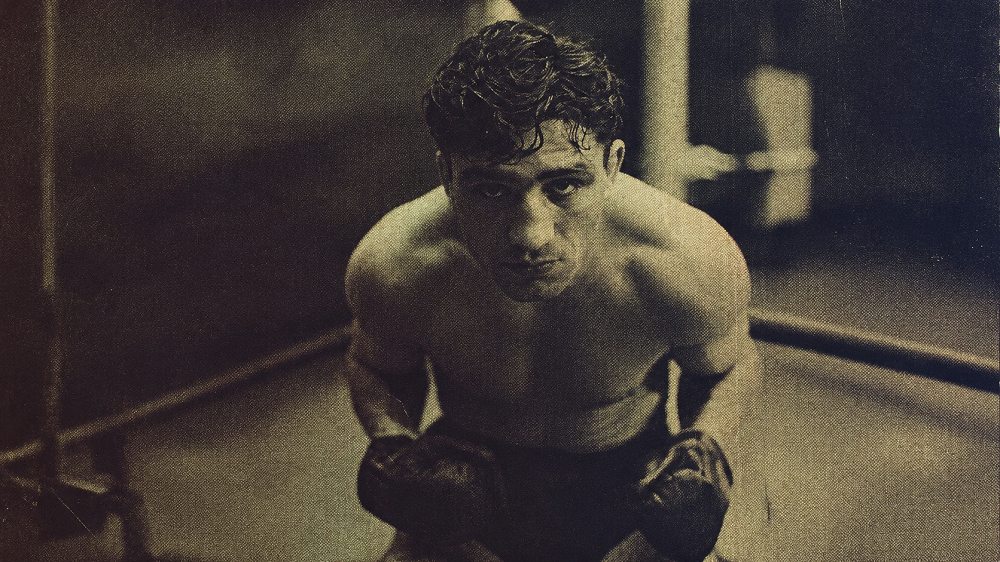
If you take a look at the record of Anacleto Locatelli, better known as Cleto, the first thing that catches your eye is the number of defeats: forty-one in 161 professional bouts fought between 1926 and 1941. Judged by today’s standards, that figure might raise a few eyebrows among boxing fans. Yet hidden within those numbers lies one of the most paradoxical and fascinating stories in Italian boxing history: that of a fighter whom Umberto Branchini, Steve Klaus and Roberto Fazi considered the most talented Italian boxer of all time, but who paid a heavy price for his artistry, naivety, free-spirited and hedonistic nature, and an era that showed little mercy to those without the right connections.
Born in Bellinzona on 5 November 1906 to Italian parents, Cleto moved to Milan in 1912. As a child, he would wrap rags around his knuckles to imitate boxing gloves: his destiny was practically already written. He took his first steps in the ring at the Unione Sportiva Milanese gym and, after completing his military service, began competing in the amateur circuit, with mixed results.
Turning professional in January 1926, he wasted no time making his mark. In 1929, he captured the Italian lightweight title by defeating Vincenzo Rocchi. His first title defence, however, brought him back down to earth with a bump: he lost the belt to Carlo Orlandi, the 1928 Amsterdam Olympic champion. It marked the beginning of a rivalry that would span a decade and six fights in total, with Orlandi winning three, two ending in draws and Locatelli claiming just one victory.
In 1930, Locatelli decided to leave Italy for Paris. He had barely any money in his pocket and felt that Milan had become too small for him. In France, where his name was soon shortened to “Cletò”, he faced established names and high-calibre opponents, and beat them. After all, he had few alternatives if he wanted to earn enough to make a living. Before long, the public had taken him to its heart. His imaginative boxing, lightning-fast combinations, dynamism, sheer tenacity and the left hand that would become his trademark turned him into a crowd favourite. Between 1930 and 1933, he fought more than thirty times in France, losing just once. His purses grew increasingly lucrative, and Cleto opened his own establishment, “Chez Cletò”, cementing his bond with Paris and the glamorous social scene that animated the French capital during those years. He was loved, idolised and well integrated into Parisian society.
On 17 July 1932, in Rotterdam, in front of 10,000 spectators, he captured the European lightweight title by defeating Dutchman Beb Van Klaveren. He became the first Italian lightweight to achieve this feat. In December of the same year, after winning two more bouts, he lost the title in Brussels to Belgian fighter François Sybille, following a disqualification for low blows – a decision that was heavily criticised.
1933 was the year of the fights that would cement his reputation. On 27 April, at London’s Royal Albert Hall, he faced Jack “Kid” Berg, a former world super-lightweight champion and future International Boxing Hall of Fame inductee. Locatelli won on points after ten rounds, landing sharp straight punches and never allowing himself to be overwhelmed by the Englishman’s furious counterattacks.
On 22 October 1933, in the ring set up at Piazza di Siena in Rome, on the undercard of the world heavyweight championship bout between Primo Carnera and Paulino Uzcudun, Locatelli reclaimed the European title by defeating Belgian François Sybille on points before a crowd of 60,000. Among those ringside was Il Duce himself, a great admirer of the boxer, who later received him in private to offer his congratulations.
His ambition drove him to cross the Atlantic and head for America, where he dreamed of becoming world champion and enjoying everything that came with it: the limelight, far bigger purses, fame and glory. He made his New York debut on 15 December 1933 against the great Tony Canzoneri, one of the finest lightweights of all time. He lost on points after ten rounds, but many observers believed he had done enough to win, including renowned boxing journalist Nat Fleischer, founder of The Ring magazine.
About a month later, he defeated Jack “Kid” Berg once again, and within less than a month he was preparing for a rematch with Canzoneri. On 2 February 1934, the two men collided in a brutal encounter at Madison Square Garden. The draw verdict was already bitterly disappointing, but matters took an even more extraordinary turn: while the fighters were in their dressing rooms, the decision was changed to a victory for Canzoneri. Adding insult to injury, the New York Times strongly criticised the incident.
Many of Cleto’s fights on American soil do not even appear in the official records. He defeated Benny Bass, Frankie Click and Fritzie Zivic, all of whom would go on to become world champions. He also faced Charley Burley, although the bout was never officially recognised.
And yet, precisely when his talent was reaching its peak, the first cracks began to appear. Locatelli was a technically refined boxer: incredibly fast, with a double left jab that deserves to be passed down through the generations, and a double combination consisting of an uppercut to the body followed by a left hook to the head, which became his trademark – a move that anticipated techniques later associated with far better-known fighters. The press sang his praises and celebrated his extraordinary talent. But none of this was enough to protect him from defeat.
The frequency with which he fought, often more than once a month, is almost unimaginable by today’s standards. The calibre of his opponents was exceptionally high, ranging from lightweights to middleweights. Cleto had no one looking after his interests, and his career was littered with away bouts against world champions, often with the crowd against him and, more importantly, facing judges who could easily be swayed. He fell victim to questionable decisions, some of them downright scandalous.
Then there was the human factor, which contributed to his physical decline. Cleto enjoyed the high life, and as time went by, the nightlife and social excesses drained his energy and determination. He also suffered from persistent stomach problems that constantly plagued him. By the age of thirty, he was already on the decline. His two points defeats against the extraordinary Marcel Cerdan, who was ten years younger, in 1938 and 1939, perhaps represented the final flashes of his class. The French-Moroccan fighter himself later declared that, for several rounds, he had felt as though he were fighting Satan.
The wear and tear had finally caught up with him. Back in Paris, Cleto became a high-class trial horse for up-and-coming fighters looking to make their mark. But his career was now drawing to a close. He continued fighting until 1941, when, in the midst of the Second World War, he finally hung up his gloves.
Fate, however, was not on his side. During the German bombing raids on Paris, his establishment was destroyed, leaving Cleto without a job and without his only source of income. He was also briefly arrested because he had been received by Mussolini several years earlier. The money he had left, after years of high living and reckless spending, soon ran out, while the connections he had made during his glory days gradually vanished like mist in the morning sun. Paris had turned its back on him.
Before long, he found himself alone and destitute, living in a squalid hovel along the Seine and wandering the streets like a tramp, just to scrape together enough money for alcohol and cigarettes.
He was eventually found unconscious along the banks of the Seine and taken to Créteil Hospital, just outside Paris, where he died on 5 October 1961, aged 55, worn down by hardship and deprivation.
His name, all too often forgotten, belongs among the select group of fighters who helped shape the history of Italian boxing. In 2021, Cleto Locatelli was inducted into the Italian Boxing Hall of Fame in the “Pioneer” category – a long-overdue tribute to one of the most historic and charismatic figures in Italian boxing.