




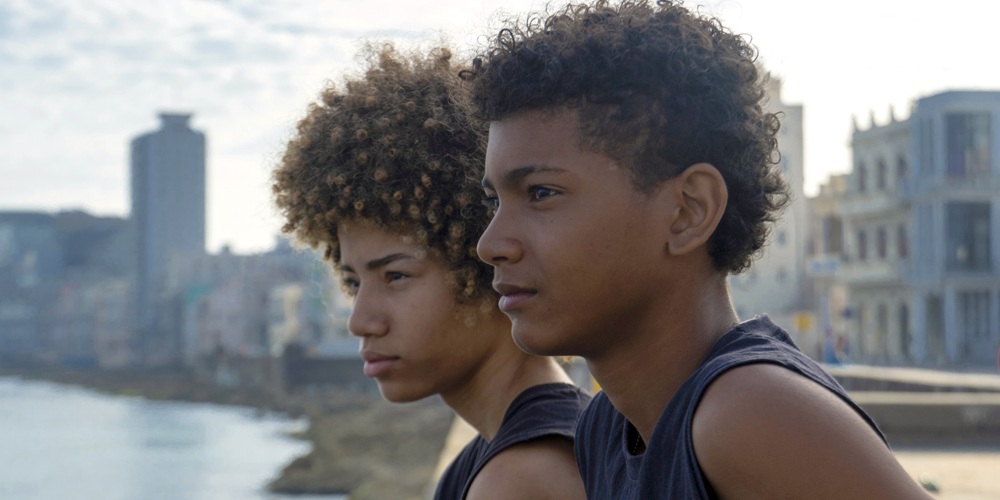
A true boxing fan — the kind willing to travel the world with a backpack on their shoulders in order to experience firsthand the gyms and iconic places that shaped the history and evolution of the Sweet Science — could never leave Cuba off their itinerary. The mysterious and seemingly inseparable bond between the Caribbean island and boxing, which over the years has produced countless champions of boundless class, made its powerful entrance into our movie theaters this year thanks to the documentary A Tu Lado, directed by Neapolitan filmmaker Cristiano Regina.
In this article, we will try to offer an overview of what we believe are the “pillars” of this admirable project, in the hope of inspiring enough curiosity to encourage you to head to the cinema at the date and venue most convenient for you (the full schedule is available at the end of the article).
The Unbreakable Determination of Those Who Challenge the Rules of the Game
The original creator of the utopian experiment at the heart of the film is Samuel Fabbri from Bologna, who around twenty years ago, after integrating himself into the complex and multifaceted Cuban world while working as a tour guide, came up with the idea of founding a boxing gym — the Gimnasio de Boxeo Centro Habana — in the middle of a run-down neighborhood of the capital.
It was a visionary initiative, carried out in collaboration with the legendary Orlando Martinez, the first Olympic boxing champion in Cuban history. It was the initiative of someone unwilling to bend to the rules of the game, someone who faces life head-on, to borrow the words of Pierangelo Bertoli, and walks “against the current,” as Fabrizio De André once sang.
That rebellious attitude toward conformity and passive acceptance of reality permeates the documentary itself, as it represents the beating heart of the teachings Fabbri seeks to pass on to his young fighters alongside the fundamentals of the Sweet Science.
Haiffer and Adrialis, whose lives unfold before the viewers’ eyes together with those of the other boys at the Gimnasio, are encouraged not to surrender passively to the reality surrounding them, but instead to take hold of the steering wheel of their own lives and drive them in the direction dictated by their dreams and inclinations. Their journey toward improvement inside the ring — mastering jabs, hooks, and uppercuts — merges seamlessly with their personal growth outside the ropes.
Sharing with a Purpose
“A man alone is not an invincible warrior,” Soviet poet Vladimir Mayakovsky once wrote. A maxim perfectly suited to both the genesis and realization of this documentary, the product of an extraordinary fusion of ideas, personal stories, cultures, and perspectives. It is no coincidence that the project involved three production companies from three different countries: Italy’s Agricolture, Spain’s Fractal, and Cuba’s GatoRosaFilms.
The screenplay itself was co-written by director Cristiano Regina, who focused primarily on the technical, stylistic, dramatic, and narrative aspects of the work, and journalist Ruggero Tantulli, who contributed through extensive research and reconstruction efforts.
Those four hands then became six thanks to the contribution of Cuban screenwriter Nuri Duarte, whose perspective allowed the authors to enrich the film with the authentic voice of someone who has lived Cuba — its contradictions, wounds, and fairy-tale-like charm — since birth.
Fabbri’s charisma as a resolute “man of action” is therefore intertwined in this documentary with the intellectual work of diverse personalities, each of whom placed a small piece of themselves onto the screen in order to create a blend capable of speaking to everyone and conveying a universal message.
The Extraordinary Power of “Giving Back”
Anyone who has seen Mimi Leder’s beautiful American film Pay It Forward will remember the way its 12-year-old protagonist Trevor completes his social studies assignment, which asked students to devise a plan to change the world.
The boy invents the “pay it forward” method, based on the idea that if each of us performs an act of kindness for three other people, asking only that they do the same for others, an enormous chain of solidarity could emerge.
A naïve utopia useful only for moving and entertaining audiences? Perhaps. Yet the idea of “giving back” is precisely the spark that pushed Samuel Fabbri to embark on his adventure. A man with a turbulent past, whose encounter with boxing allowed him to channel anger and negative emotions into a positive path, Fabbri felt so indebted to the Sweet Science that he stubbornly searched for a way to repay the favor.
His gesture carries enormous multiplying power. Because the many youngsters who have passed through the Gimnasio over the last twenty years absorbed, through Fabbri’s guidance and example, the seed of giving back. If some of them one day feel the need to donate part of themselves — their time and abilities — to the community, they will help set in motion a mechanism destined, if not to change the world, at least to make it a better place.
The Importance of Having Someone “By Your Side”
The fourth and final pillar of this film that deserves to be highlighted is the crucial importance of mutual support, a theme beautifully encapsulated in the three powerful words that make up the title of the work: A Tu Lado — “By Your Side.”
The reality experienced daily by the people of Cuba is not an easy one, and it becomes impossible if you do not have someone “by your side,” ready to act as a lifeline whenever you stumble. Someone you can trust completely.
Once again, boxing becomes a metaphor for life, with the magical bond between a boxer and his trainer reflecting the deepest relationships we build throughout our existence — the ones that keep us afloat during dark times and prevent us from sinking.
Just as a man beaten down by everyday struggles, disappointments, failures, and misfortunes finds comfort in the embrace of a lifelong friend or family member, so too does the boxer, after a particularly grueling and painful round, find renewed strength on the stool through the reassuring voice of his coach, knowing that he will remain by his side even in defeat.
Dates and Venues for Upcoming Screenings
A Tu Lado premiered at the Ibero-Latin American Film Festival in Trieste in November 2025. This spring, it began its journey through Italian cinemas and has already reached several cities across the country. The list is expected to grow over the coming months, so we publish below, for interested readers, the complete schedule of upcoming screenings:
- Venice (Lido) — Cinema Astra — May 18, 7:00 PM
- Florence — Spazio Alfieri — May 18, 9:15 PM
- Pisa — Cinema Arsenale — May 19, 8:30 PM
- Turin — Cinema Baretti — May 20, 9:00 PM
- Bologna — Galliera — May 21, 7:00 PM
- Recanati — Cinema Sala Gigli — May 22 (TBA)
- Genoa — Club Amici del Cinema — May 26, 9:00 PM
- Ravenna — Cinema Mariani — May 28, 6:30 PM and 9:00 PM
- Padua — Cinema Astra — June 4, 9:00 PM
- Carpi (Modena) — Cinema Eden — June 17
- Nonantola (Modena) — Summer Festival — July 4
Boxe Punch will attend the June 17 screening in Carpi with one of its correspondents.
To stay updated on possible changes and additions to the schedule, readers can visit the film’s dedicated Instagram page through the following link: CLICK HERE.