




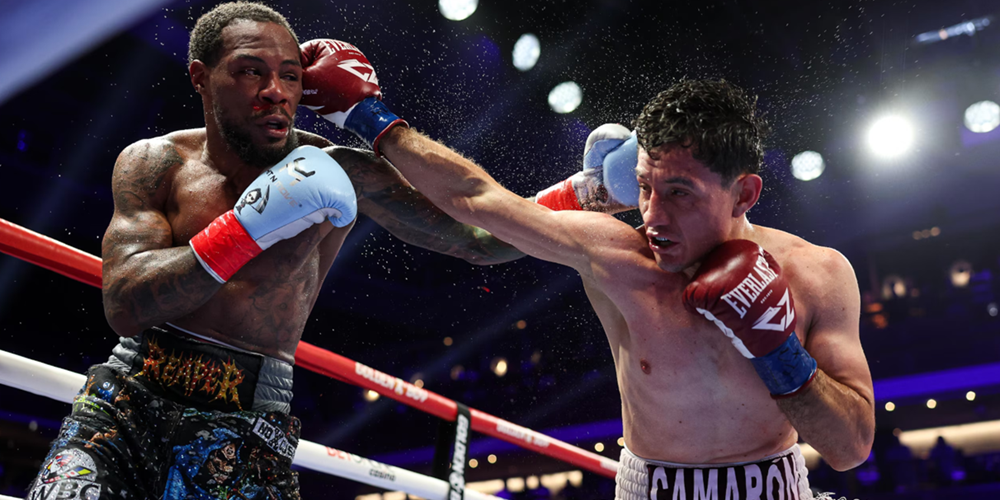
At The Theater inside the Virgin Hotels Las Vegas, William Zepeda Segura (34-1, 27 KOs) was crowned the new WBC lightweight world champion after defeating Lamont Roach (25-2-3, 10 KOs) by unanimous decision. The judges scored the bout 117-111, 117-111, and 118-110 in favor of the Mexican.
It was a remarkable display of strength and endurance from Zepeda, who was coming off a disappointing defeat to the phenomenal Shakur Stevenson. As he pointed out after the fight, Zepeda learned valuable lessons from that loss and sought to raise his game even further. The 30-year-old Mexican refined the many qualities that had already made him one of the division’s most dangerous fighters. Despite a few structural flaws in his boxing, Lamont Roach had no answer for Zepeda’s relentless work rate, constant forward pressure, excellent balance and footwork, and nonstop activity—qualities that ultimately earned him the vacant WBC title.
From the opening bell, Zepeda marched forward and immediately imposed his suffocating pressure. He quickly established control of the center of the ring and rarely gave it up, repeatedly forcing the American onto the ropes while unleashing punch after punch.
Zepeda’s astonishing punch output increased even further after the opening two rounds. Roach, true to form, relied primarily on single counterpunches. His counterpunching style, the complete opposite of Zepeda’s approach, is built around excellent defensive skills. Roach is highly effective at slipping shots, moving his upper body, and disrupting his opponents’ punching lanes. However, lacking one-punch knockout power, he often struggles against opponents with solid chins and the ability to absorb punishment—and this proved to be one of those occasions.
Roach initially looked comfortable fighting in the pocket, but the sheer volume of punches thrown by the Mexican eventually became overwhelming. By the law of averages alone, too many of them inevitably found their target. Zepeda is not an exceptionally accurate puncher, which is understandable given his incredible work rate, but allowing him to operate without slowing him down or making him hesitate can be disastrous. After the early rounds, Roach simply could not contain his opponent’s relentless intensity. He failed to establish an effective jab capable of disrupting Zepeda’s rhythm or forcing him to think twice, and without meaningful punching power, he had no way of discouraging the aggressive Mexican from constantly pressing forward.
Zepeda also did an excellent job attacking the body, varying his offense and making himself difficult to read. As the fight wore on, Roach gradually faded and found himself increasingly at the mercy of his opponent. Although he landed several sharp counters—particularly with his left hook—he was unable to build on those isolated successes. Zepeda, fighting out of his southpaw stance, remained unfazed and resumed throwing punches in relentless combinations, wearing Roach down both physically and mentally.
Zepeda’s footwork was another major factor. In addition to constantly creating new punching angles, he displayed excellent in-and-out movement that repeatedly caused Roach to miss. Holding a comfortable lead on the scorecards, Zepeda eased off slightly in the tenth and eleventh rounds, allowing Roach to enjoy his best moments of the fight, including a well-timed uppercut. However, in the twelfth and final round, Zepeda reasserted his dominance, finishing strongly and reinforcing the superiority he had displayed throughout the contest.
It was a clear and deserved victory, and Roach showed tremendous sportsmanship by applauding the official decision.
After the fight, Zepeda said he has no preferred opponent and is ready to face whoever is put in front of him.