




Two weeks ago, we published a list of remarkable victories achieved by Italian boxers on foreign soil, showing that the much-feared home advantage in boxing can be overcome even without winning by KO. Today, however, we want to talk about less pleasant moments for Italian boxing: those in which Italian fighters were let down by the judges when they deserved to have their hands raised by the referee. Here are 10 of them!
Methodological note: the list, which is by no means exhaustive, was compiled exclusively from professional boxing. Only fights whose footage was watched by the author were taken into consideration; the assessment that these were unjust defeats is solely the author’s personal opinion.
Vito Antuofermo vs Alan Minter (1980)
Many Marvin Hagler fans blame our own Antuofermo for delaying the Marvelous One’s reign thanks to a highly controversial draw. This is undoubtedly true, but it is equally true that Vito himself was the victim of an injustice in his very next defense, when he was declared the loser in Las Vegas by split decision against Britain’s Alan Minter. Antuofermo fought an aggressive and courageous fight that night, scoring a knockdown in the process, and did not deserve to be stripped of his title.
Efisio Galici vs Mauro Martelli (1988)
The fight that marked Sardinian slugger Efisio Galici’s failed attempt to win the European title was undoubtedly much more competitive than expected. After a furious start, Galici encountered considerable difficulties dealing with Martelli’s constant movement and relentless in-and-out style. Nevertheless, in my view, consistently taking the initiative, landing the more impactful punches and finishing the fight more strongly should have been enough to tip the scales, albeit narrowly, in favor of our man.
Vincenzo Belcastro vs Robert Quiroga (1991)
As in Galici’s case, this decision is particularly astonishing because the fight took place in Italy. For much of the bout, Quiroga was completely overwhelmed by Belcastro’s relentless pace, which gave him no breathing room and prevented him from mounting any sustained offense beyond sporadic and fleeting moments. Astonishingly, two judges did not merely score the fight in favor of the American, but gave him enormous margins of victory — ten points and six points respectively — as if they had been watching an entirely different fight.
Cristian Sanavia vs Danilo Haussler I (2005)
After winning the world title and losing it a few months later, Cristian Sanavia traveled to Germany for the third time to fight local hero Danilo Haussler for the WBA Intercontinental title. The Piove di Sacco native, who was still at the peak of his powers at the time, appeared to have the better of things for much of the fight: even when he did not dominate the rounds, he almost always did more in terms of effectiveness, punch output and aggression. Nevertheless, the judges handed him a bitter majority-decision defeat. “Fighting on the road is like going to war,” Sanavia said years later.
Domenico Spada vs Mahir Oral (2007)
The German boxing school of the early 2000s often employed a fairly basic tactic: staying tightly covered for much of the round, allowing the opponent to expend energy and tire himself out, before suddenly becoming more active during the final thirty seconds in an attempt to convince the judges that they had done enough to win the round. Even taking the most charitable possible view of the hometown fighter, however, it is extremely difficult to understand how two of the three judges could have scored the fight for Oral that night in Hamburg, given that his boxing, compared to Spada’s, appeared decidedly lackluster and ineffective.
Paolo Vidoz vs Sinan Samil Sam (2008)
The fight was not particularly entertaining, and it must be acknowledged that our own Vidoz was not at his best, but the overwhelming majority of neutral observers who watched it felt that the Italian had done enough to win. The injustice of being denied a deserved victory was made even more bitter by the verdict being changed “after the fact.” A draw was initially announced, which would have left the European title vacant; then, almost two weeks later, Samil Sam was awarded the victory after French judge Robin Dolpierre admitted that he had made a mistake when filling out his scorecard.
Brunet Zamora vs Denis Shafikov I (2010)
Had Brunet Zamora turned professional a few years earlier, he might well have reached some truly prestigious heights. The fight we have included in this list is proof of that: facing the ferocious Russian destroyer, who spent years near the top of the world rankings, “El Italian Salsero” displayed the class and timing of a true champion. On neutral ground, he would have been declared the winner, but the fight took place in St. Petersburg and the judges were unwilling to go any further than a draw.
Simona Galassi vs Mariana Juarez (2011)
The fight between our “Romagna Queen” and Mexico City’s “Barby” was competitive and thrilling, with the two women taking turns in control in a fascinating clash of very different styles. Personally, I believe Simona’s greater accuracy and cleaner technique deserved to be rewarded, although the fight remained extremely close throughout. The fact that the judges unanimously scored it for Juarez, with two scorecards giving her a four-point advantage, suggests that, short of a KO, the outcome had essentially been decided before the opening bell.
Devis Boschiero vs Takahiro Ao (2011)
Given the tremendous dedication, self-sacrifice and professionalism with which he managed his entire career, Devis Boschiero truly deserved the immense joy of winning a world title, and his trainer Gino Freo deserved to share that triumph with him. This makes the judges’ verdict at the end of their 2011 fight in Tokyo all the more frustrating. Ao relied heavily on exhausting clinching and spoiling tactics for long stretches, while our man consistently took the initiative and landed the better punches.
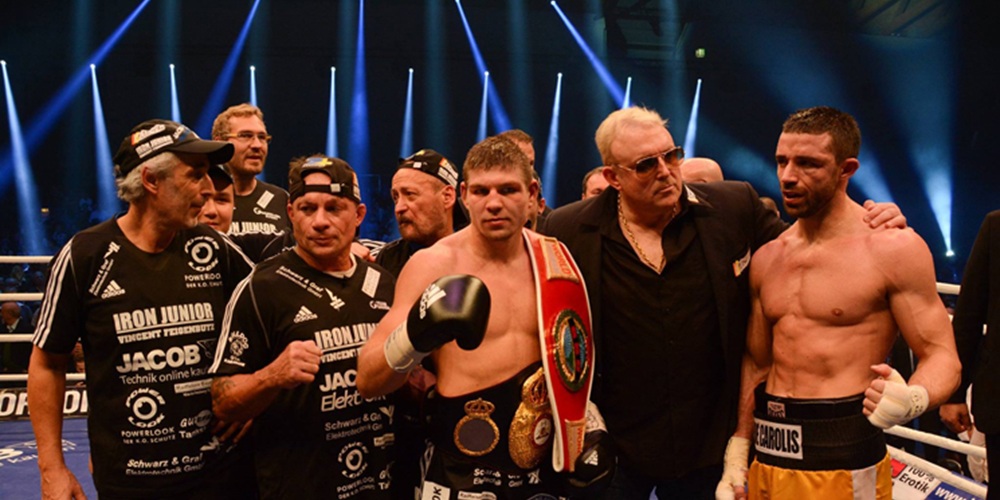
Giovanni De Carolis vs Vincent Feigenbutz I (2015)
Giovanni De Carolis won the WBA world title in 2016, when he spectacularly knocked out Germany’s Feigenbutz. But the Italian should have been crowned world champion a year earlier, when he gave the same opponent a boxing lesson without managing to stop him. Knocked down in the first round, Feigenbutz absorbed far more punches than he landed, yet was inexplicably declared the winner. Fortunately, the immediate rematch gave Giovanni the chance to right the wrong and finally lift the coveted belt above his head.