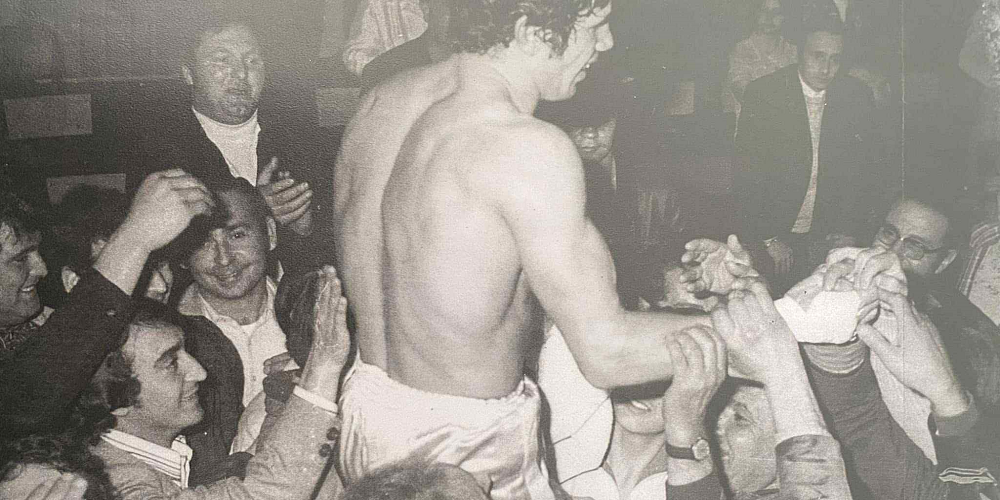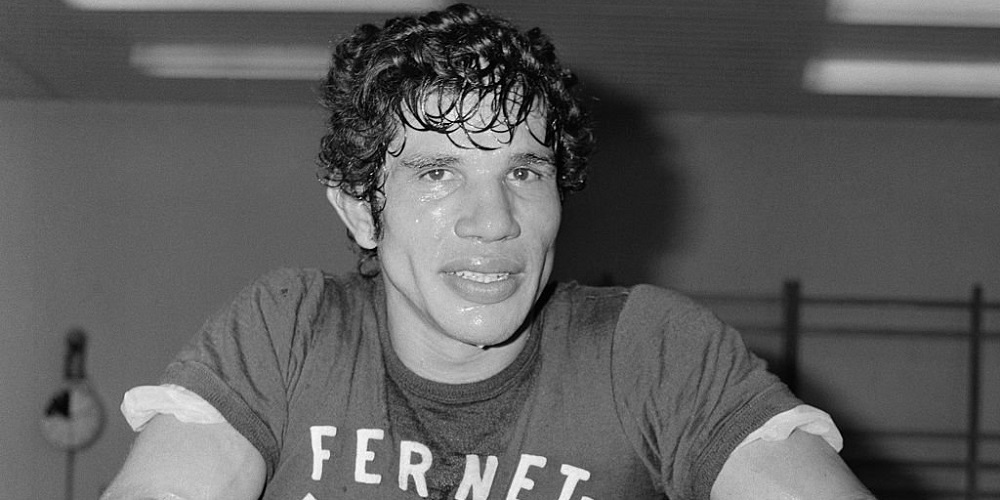
It is December 13, 1975. Seven thousand three hundred spectators are packed like sardines inside the Nouvelle Hippodrome in Paris. The atmosphere is electric, the escape routes virtually nonexistent—so much so that, according to reports of the time, a panic outbreak would almost certainly have caused a massacre. All eyes are fixed on the center of the ring set up in the heart of the racetrack, where one of the greatest middleweights of all time, Carlos Monzón, faces the local idol, Gratien Tonna. As he gives the final instructions before hostilities begin, the referee warns both men not to strike to the back of the head—a warning that will prove eerily prophetic.
But who is that big young man with the deep gaze and sculpted musculature, about to battle fearlessly against the indestructible Argentine great?
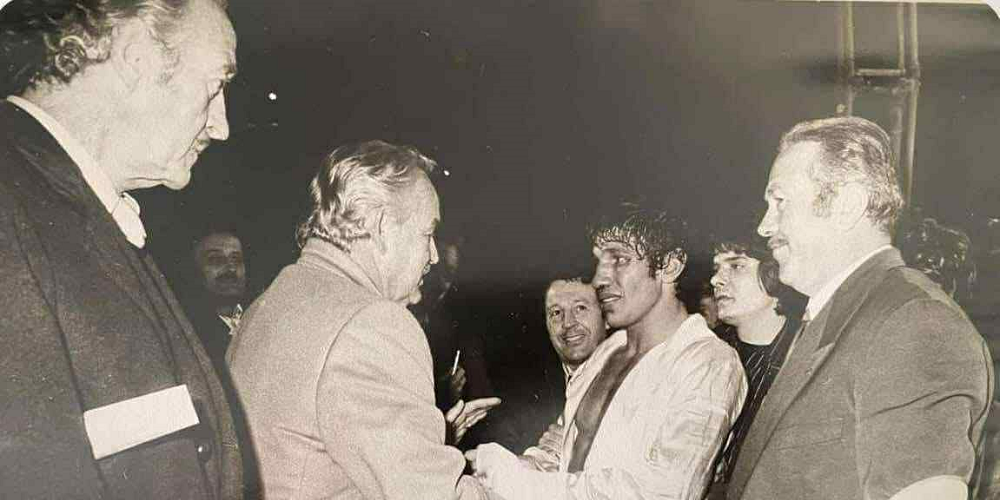
From street brawls to a presidential ban
Tonna was born in Tunis to Maltese parents in 1949, when Tunisia was still a French protectorate. Considering that he later moved to France, trained in Italy—where his sister Carmen still lives—and that his cousin Charlie Magri covered himself in glory on British rings, it is clear that Gratien was a true cosmopolitan, a “citizen of the world.”
Among the many languages he learned throughout his life, however, the one Tonna mastered best was the language of his fists of steel—the language that turned him into a raging bull between the ropes.
Gratien discovered boxing very early. By the age of twelve, his turbulent temperament—sharpened by his family’s precarious economic conditions—had already drawn him into numerous street fights. Joining a boxing gym allowed him to channel that aggression into a setting where discipline and respect for rules were essential.
Backed by a naturally Herculean physical strength, Tonna quickly made his way up, victory after victory, earning a place in the final of the Tunisian amateur championships—only to be expelled from the tournament for political reasons. It was a period of strong nationalist claims in Tunisia, a country that had gained independence only a few years earlier. President Habib Bourguiba would not tolerate the idea that a boxer whose roots were not native could become national champion.
Gratien was labeled a “Frenchman,” which is rather ironic, since French was actually the language the young man struggled with the most—so much so that, years later, he felt uncomfortable during the unavoidable press interviews ahead of his biggest fights.
The triumphant rise and a great chance that came too soon
After moving to Marseille in 1967, Tonna enjoyed a brief but brilliant amateur career, winning numerous prestigious tournaments, including the Military World Championships in Thessaloniki and the French Championships. His swashbuckling style and the lethal power of his punches were better suited to the professional ranks, however, and shortly before turning 22, Gratien made the leap.
His climb toward success was rapid and impressive. Opponents crumbled under the weight of his blows and could not contain his relentless pressure. Among those who tasted the punches of the Franco-Tunisian puncher were several Italians: Roberto Bisotti, Mario Lamagna, Remo Golfarini, Domenico Tiberia, and Luciano Sarti were all subdued, while Fabio Bettini managed to prevail once before being defeated in the second and third encounters.
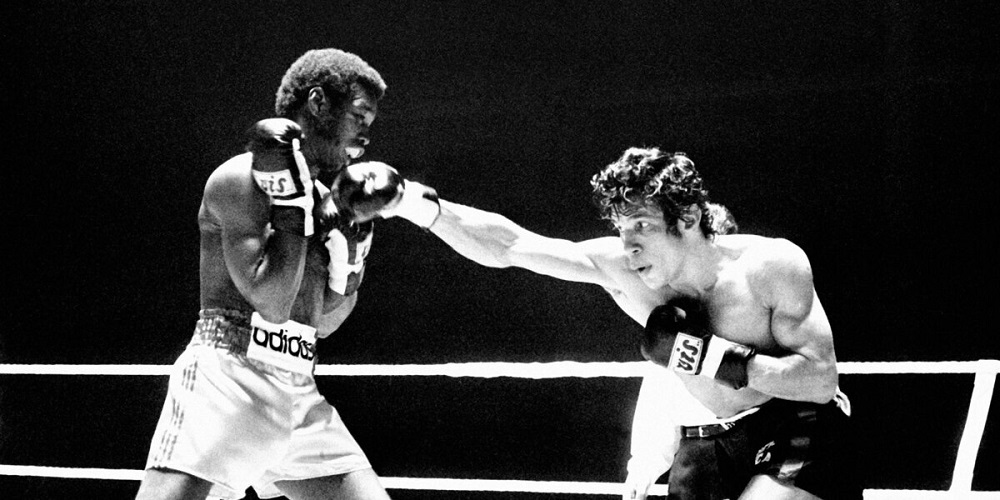
Tonna’s vertiginous rise prompted his team to take a big gamble by inviting the newly crowned WBC middleweight world champion Rodrigo Valdés to Paris. The Colombian was a true force of nature: six months earlier he had scored a brutal knockout of Bennie Briscoe, one of the toughest men in boxing history.
For the occasion, Gratien chose to be trained by Italy’s own Rocco Agostino, who oversaw his preparation in Genoa. The renowned Italian manager would then, unwillingly, play a crucial role at the decisive moment of the fight: when Tonna, in the eleventh round, was illegally knocked down after the referee’s break, Agostino shouted at him to stay on the canvas, mistakenly convinced that Valdés would be disqualified.
Regardless of the controversy, French and international journalistic sources agree in stressing that the champion had the fight well in hand at the time of the stoppage. Tonna had bitten off more than he could chew, but that defeat helped him improve and propelled him toward one of his greatest triumphs: winning the European title.
European glory and the challenge against Monzón
At the Stade Louis II in Fontvieille, in the Principality of Monaco, against the intrepid British boxer Kevin Finnegan—who years later would put in a laudable, competitive performance against the great Marvin Hagler—Gratien displayed unsuspected technical and tactical improvements.
The well-known Italian journalist Roberto Fazi, who covered the event ringside, wrote that Tonna “in the final rounds decided to amaze the crowd: he turned to technique—he, the antithesis of a technician—and whether because Finnegan was tired or because he was unprepared for his opponent’s metamorphosis, Tonna’s left hands, elegant and timely like those of Cassius Clay, landed on his face with unexpected naturalness.”
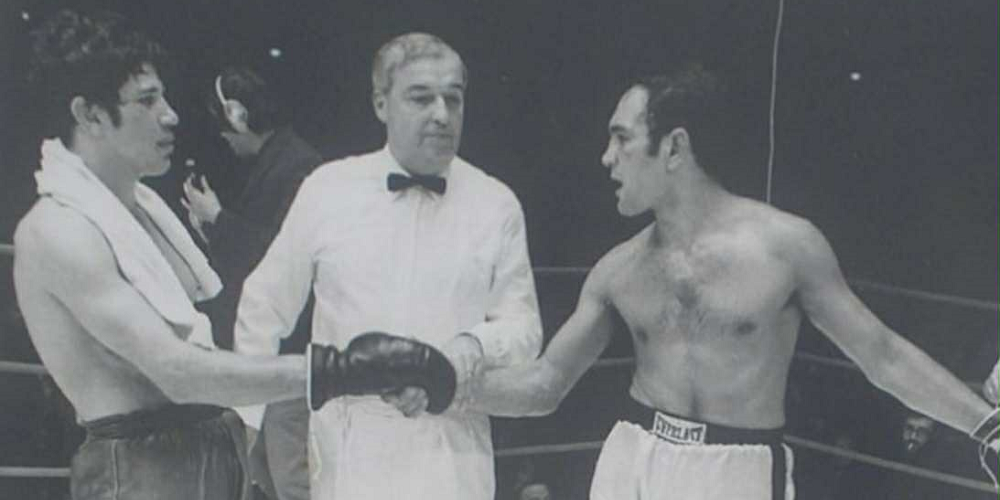
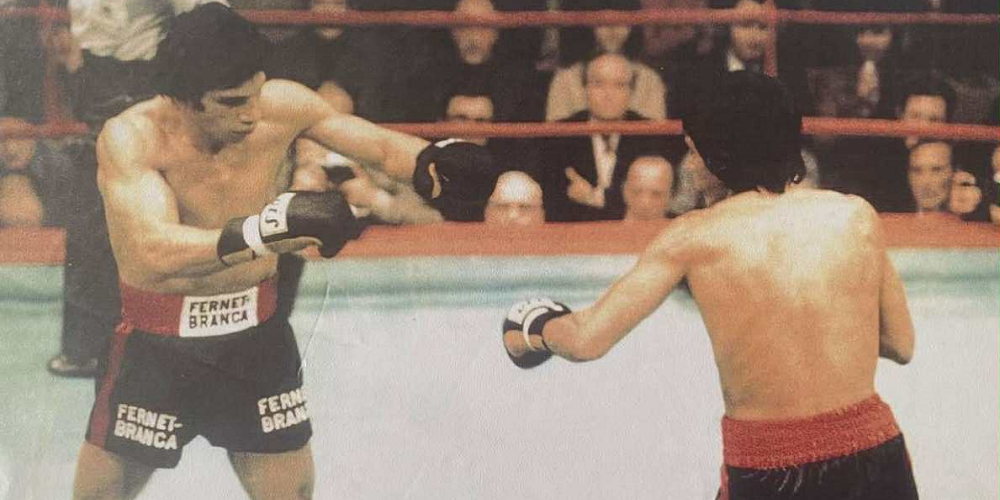
And so we return to the chilling scene with which we opened this piece: the racetrack too small to contain the electrified crowd that had poured in; the expressionless eyes of the ferocious Monzón, as uncontrollable outside the ring as he was icy and calculating inside it. In the stands, the fragile hope of witnessing an epochal upset mingled with ominous forebodings.
Gratien approached the bout with the recklessness typical of someone who has nothing to lose. He pressed forward, closed the distance, firmly held the center of the ring, and loaded his punches with violence, while his seasoned rival let him expend energy, cushioning the blows with agile movements of torso and head. When in the second round Monzón found his range and peppered him with straight punches, Tonna taunted him with brazen grimaces.
At the start of the third round, the Frenchman landed two ferocious hooks that could have dropped a bull, but Carlos did not flinch, immediately regrouped, and returned the favor. Gratien’s fate was sealed: unable to breach the rival’s rugged hide, the challenger sensed his weapons were blunted. His attacks grew more chaotic and uncertain, his defense began to leave inviting gaps into which Monzón’s right hand slipped with increasing frequency.
Once again, as against Valdés, the ending left everyone with a bitter taste. After absorbing a deadly counter jab to the tip of the chin, Tonna lost his balance and turned his back, allowing his opponent to unleash a powerful right to the back of the head. Gratien dropped to his knees, dazed and confused. The referee, Puerto Rican Waldemar Schmidt, carried out the count without hesitation. The dream of becoming world champion had vanished forever.
The last hurrah
The Frenchman did not give up, however. He went back to grinding out victories and scored five consecutive knockouts, earning another European opportunity that materialized in Milan. At the San Siro Palasport, Tonna defeated the excellent English boxer Alan Minter—stopped due to a cut after eight fiery rounds—thus seizing the continental crown for the second time.
It was the last hurrah of the Franco-Tunisian boxer with fists of steel. The defeat suffered in the United States in a world semifinal against the crafty Ronnie Harris deeply demotivated Tonna and marked the beginning of his downward slide. The American neutralized him by constantly clinching, under the impassive eyes of that same referee Schmidt of whom Gratien certainly did not retain fond memories.
Subsequent losses to Minter and Finnegan—whom he had beaten at his peak—though coming in competitive matches, confirmed that Tonna had embarked on the path of decline. Nevertheless, Minter later expressed his disbelief at the tenacity of the valiant French athlete: “I was getting in some fantastic shots, but everytime I thought I had Tonna, he was still standing right there.”
Today Gratien is 77 years old. Had he been born in another era, he would very likely have become a world champion. Unfortunately for him, he ran into two towering figures in middleweight history and, perhaps through inexperience, perhaps due to small character flaws, he failed to manage the crucial moments of those spine-tingling challenges in the best possible way.
We are certain, however, that over the years pride has outweighed regret for those defeats—pride in the emotions he inspired, the many overwhelming victories, and in having been a point of reference for all those who love him, showing strength not only in his muscles but in his spirit and humanity.
Warm thanks go to François Tonna, Gratien’s nephew, for his fundamental collaboration in the preparation of this article.