




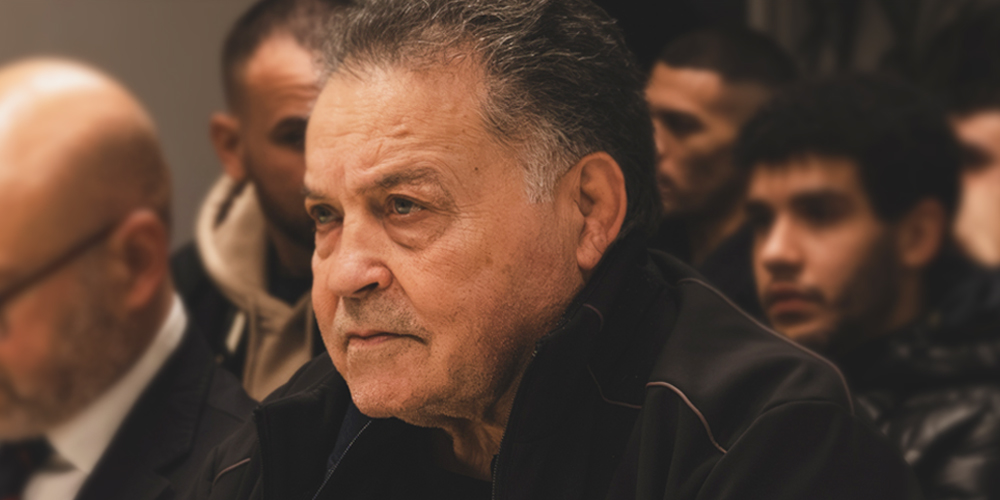
We continue telling you about those who have made the history of Italian boxing with our column “The Coach’s Voice.” This third installment is dedicated to someone I simply could not refrain from celebrating: the legendary coach Vincenzo Quero, who turned his style into a true trademark. It was in his gym that I grew up, and wherever his name is mentioned, his reputation precedes him. His Quero-Chiloiro Boxing Club celebrated just over a month ago an impressive 55 years of activity—years that, over such a long period, have been filled with commitments and satisfactions for him and his children. Let’s hear from his own voice some anecdotes, curiosities, and thoughts about his long and glorious career, and much more.
Where does Vincenzo’s boxing story begin, and how? And when did the desire to teach arise?
Back in the day, you grew up on the street. You always played with other kids, you played lots of games, you were always on the move… and you also got into fights. I remember that when I left elementary school, it always happened that some annoying kid would insult me, and I’d put my schoolbag down on the ground and argue with him, throwing punches and kicks, and then I’d run off. I didn’t run away out of fear, though, but because I was in a hurry to go to work. I helped a greengrocer, delivering groceries to people’s homes. Meanwhile I was growing up, and at a certain point a friend took me to a gym, the Canfora school gym, where you trained for an hour, an hour and a half of boxing. Many years ago, the gyms you see today didn’t exist. Then summer came and, when schools closed, that gym closed too. So I had to look around. They told me there was a boxing gym in the Old Town and I started there. It was a small gym, with just two heavy bags and a tiny ring, a bit makeshift. Teaching there was coach Galasso, who immediately noticed that I was a strong kid, that I could hold my own in the ring even if I wasn’t perfect yet (I refined myself little by little over the years). In fact, he took me to fight right away—to Lecce, Brindisi, and various places. When I fought I was aggressive, I hit hard, and people liked me.
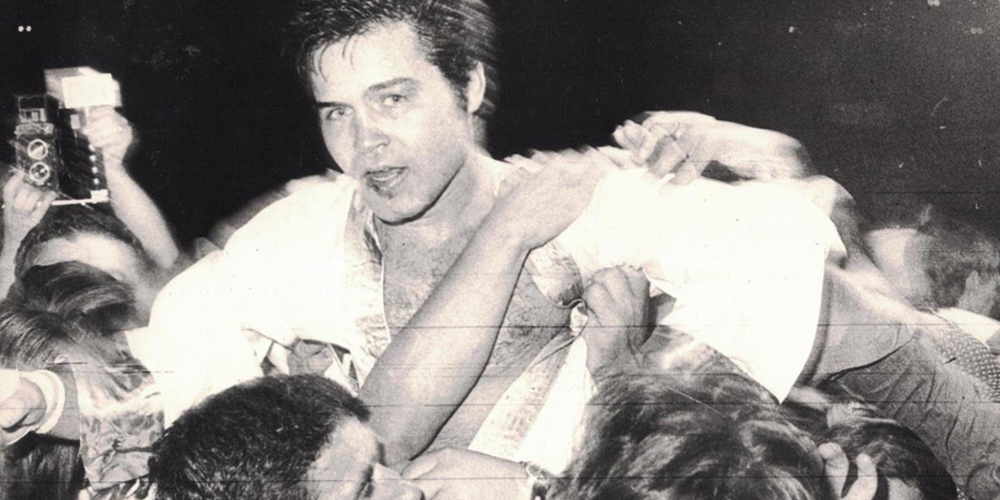
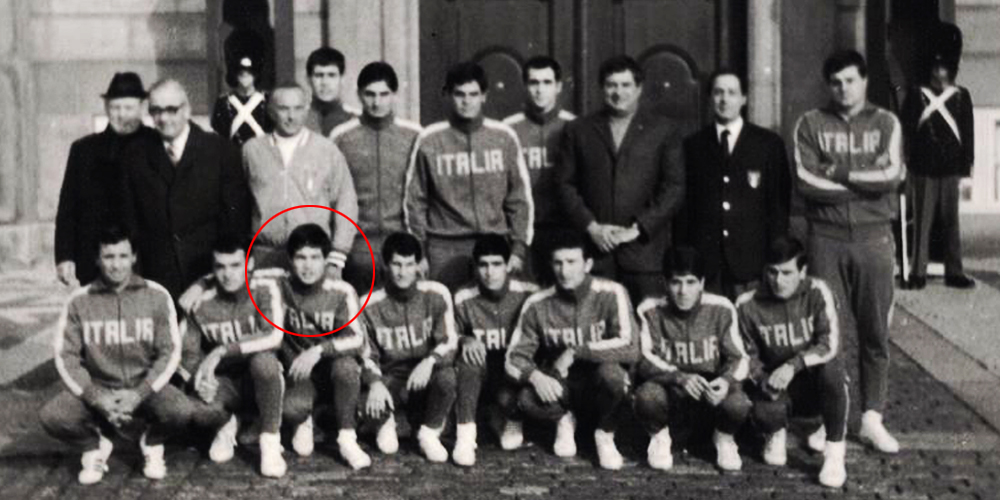
Then came the age of compulsory military service, and I became a sailor. At the time, naval service lasted two years, and I spent those years in Rome. While I was there, I boxed and grew well as a fighter; I went into the national team—not the military one, but the civilian team, where they selected the best boxers in Italy. With the national team I had several bouts, many of them abroad. At a certain point, I don’t know whether it was to make room for someone else or not, I couldn’t pass the annual medical exams; they didn’t give me clearance because they said I was missing two tenths of vision in my left eye, and so I stopped. However, I had the luck—within the misfortune—that in the gym where I had trained up to that point in Rome, they held courses to become a boxing coach. So the coach there, who was sorry when I was declared definitively unfit for competition, had me take the courses; first you had to do the aspiring instructor course and then, after two years, the instructor one, but since I was a well-liked kid, they allowed me to do it right away, about a month after the aspiring course. I was 20–21 years old. After finishing the military service, I returned to Taranto and started helping out in the gym. Around that time, professional boxer Domenico Chiloiro—who was my friend—had just returned from Australia, and every day I would drive him to the Navy gym and help him train.
The Navy coach, a man from Taranto, who saw me working with him—making him throw punches, slip, step back and come back in, a kind of boxing they didn’t do before—said to me: “Vincenzo, you’re good. Why don’t you open a gym?” At first I didn’t feel up to it; I was young, only 21, and I didn’t feel equal to the responsibility. But then this coach spread the word among his friends, shopkeepers from Via Cesare Battisti, about ten boxing enthusiasts, who got to work to make it happen. One day Chiloiro came to call me because he had seen a place on Via Emilia. It was an old carpentry workshop, full of dust and with walls that needed fixing, but we decided to take it. I started painting, fixing things up… and that’s how the QUERO-CHILOIRO was born, right where we still are today.
Meanwhile, after two years the regulations regarding eyesight were changed and I took the medical exam again. So I was able to resume boxing. I became Italian champion again, went back to the national team, then turned professional with a major manager from Milan, the well-known Branchini. I continued training here in Taranto; he would call me and set appointments in Bologna, Milan… I often fought in Milan because I put on a show with my boxing; a journalist once said of me: “When Quero fights in Milan, the Palalido fills up.” And that’s it—I had 51 professional bouts; I became Italian champion in 1975, fighting twelve rounds against Sanna in Taranto. I filled the entire Iacovone stadium; there were 10,000 people and even the RAI was there. However, I vacated that title immediately; I didn’t make any defenses because my manager wanted us to aim for the European title. In fact, that same year I fought a European semifinal in Milan, but I couldn’t win it. I arrived there mentally down because I had had problems with a secretary at the gym who sold counterfeit tickets. In short, I fought until 1979; after that I devoted myself completely to coaching.
What is the fondest memory from these 55 years of honorable activity?
There are many, but the greatest satisfaction was having contributed to making Chiloiro European champion in 1972: I coached him, took him to Lignano Sabbiadoro, and we won. It was a great thing; he was the only one from Taranto to bring home that title.
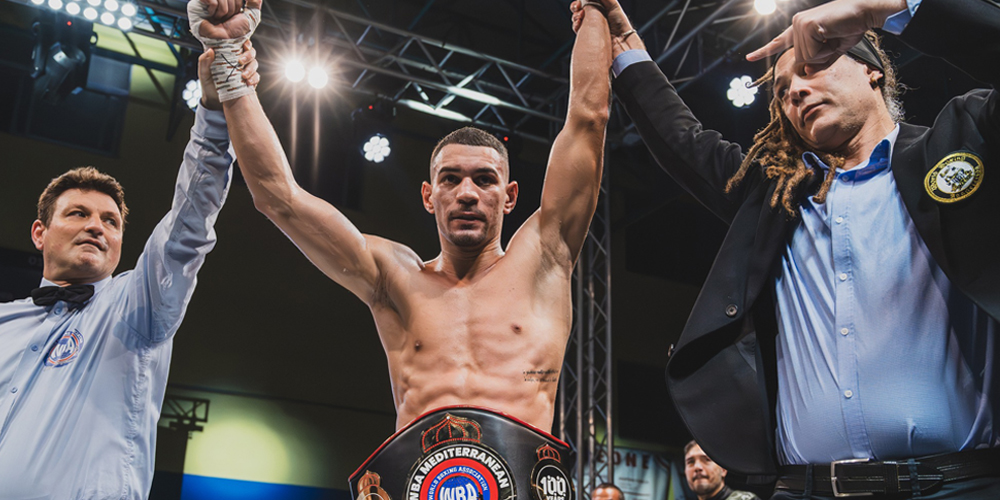
Today, in the gym we have very good professionals who can aspire to important titles, and we follow them as best we can. I’m satisfied with that as well. Last month we organized a major event at the PalaFiom for the WBA Mediterranean title (later won by our Nino Rossetti), and we filled it—there were many people, and it gave me great pleasure. I’ve kept a very nice memory of that evening.
In your opinion, what is the most important quality a coach must have?
There are several. A coach must have the ability to earn respect both with good manners and, if necessary, with tougher ones; sometimes you even get angry with a kid, but only for his own good, to help him learn things even better. You need patience; you have to stay on him, give him the right consideration, the satisfaction of making him feel like somebody. A coach must be able to do a bit of everything to keep him happy—reprimand him, yes, but also recognize his merits.
What is the secret to staying active for so long? Has anything changed at Quero-Chiloiro compared to the past?
I always did sports after my job; I’ve always worked my whole life. I even worked at the blast furnace at Italsider, a very dangerous place. Back then I only did one shift for the boxers; then little by little, as I approached retirement, I started doing two shifts, three shifts in the gym, and now we even work in the mornings. In short, the gym has grown with more shifts; there are other coaches—ten of us now, including myself—and it has grown enormously because of that too. We’re very well known in Italy; they call us to bring boxers, to have them fight—we’re among the top gyms in Italy. Over time the gym has been expanded; I like to give more comfort to those who come. I took adjoining spaces to make it larger and more comfortable; it’s become nicer, I added more heavy bags. We’ve raised many kids, many champions, and that’s how the gym has thrived.
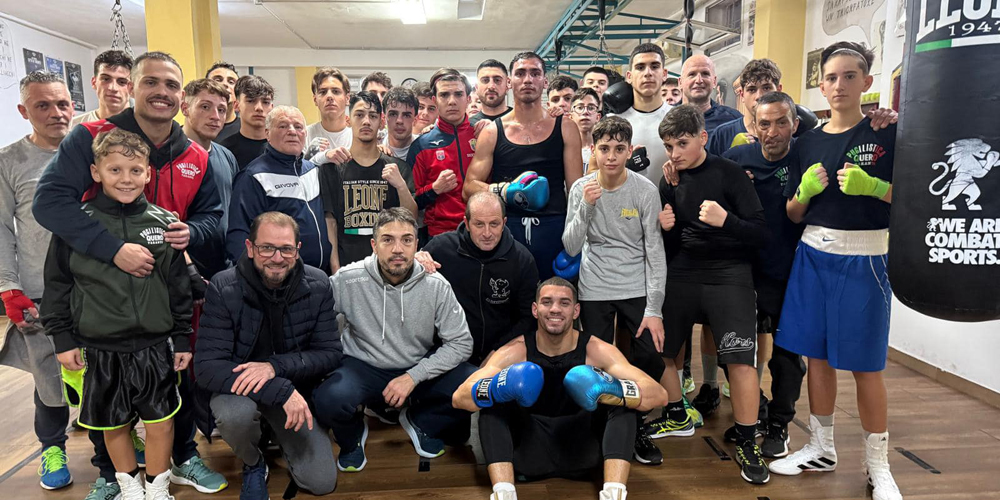
Are you proud of the work your children are carrying on? Do you still give advice to the boxers and/or to your children as coaches?
Yes, I’m satisfied. I still go to the gym often, but I sit down; I don’t do much because I’m 78 years old—I can’t move like I used to. I watch them work; there are the other coaches. My children are there, carrying things forward, always after their own jobs (they both work at school). First work, then the gym. And that’s it—we have our satisfactions.
Sometimes yes, I still give advice to the kids, from time to time, because now it’s them—Aldo and Mimmo—and I step aside. I give them advice: little steps forward, little steps back, little steps to the left, little steps to the right. Because boxing—maybe those who aren’t inside don’t know this—isn’t just about throwing punches; there are slips to avoid punches, there are movements to avoid punches with little steps to the right and left, a step back and then coming back in… And sometimes I see these things in the gym and I say something, both to the boxers and to the other coaches as well.
We extend our deepest thanks to coach Vincenzo, who, with his ever-burning spirit, still manages to keep the flame of boxing alive and to uphold the honor of this sport by shaping—together with his children and the people around him—not only boxers, but men of value… just like him.