




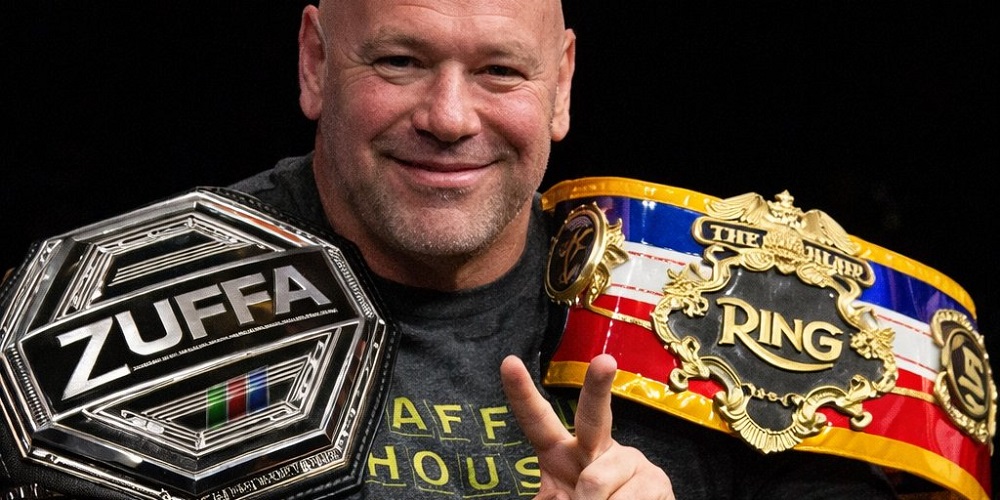
Eight weight classes instead of seventeen, a single world champion instead of four, the best fighters placed in a position to face one another without being hindered by television rights, disputes between rival promoters, or the abstruse rules imposed by various organizations. The ambitious goal of Zuffa Boxing and its founders, Dana White and Turki Alalshikh, to revolutionize boxing sparks the imagination and hope of many fans of the Sweet Science. Yet, from the perspective of the writer of these lines, it is destined to fail miserably. In this article, I will explain the five main reasons that lead me to think so.
1) The Significant Biases of White and Alalshikh
As a government official of a dictatorial country, Turki Alalshikh is not accustomed to dealing with dissent. In the world in which he grew up and acquired power, those who oppose the will of the leader are easily neutralized, by fair means or foul.
His belief that he can act undisturbed has been further reinforced by these first years of massive investments in the boxing world, as almost everyone—promoters, fighters, journalists—has rolled out the red carpet for him, having everything to gain and nothing to lose in welcoming his arrival and benefiting from his resources.
Dana White, for different reasons, is also deeply conditioned in his way of thinking by his past. In his case, what risks leading him astray is the great success he achieved in the world of mixed martial arts.
Having managed to monopolize that world with the UFC, White is convinced he can do the same with boxing by adopting similar strategies. He himself said it: “If it works for the UFC, it should certainly work for boxing.”
Both Alalshikh and White, therefore, will inevitably make serious errors in judgment and management, because in this venture they will have to measure themselves against an environment that is extremely different from the one in which they made their fortunes.
2) Boxing Is Not Like MMA
To claim, as White did, that what works for the UFC should work for boxing, is somewhat like saying that coffee can be grown in Siberia just because potatoes are grown there. Although both belong to the broad category of combat sports, boxing and mixed martial arts have multiple differences that make it highly questionable to assume they can be managed in the same way.
Among the various differences between the two disciplines, two in particular deserve emphasis: the number of practitioners and the so-called “seniority” of the sport.
According to the statistics currently available, the number of professional athletes engaged in boxing worldwide is more than double that of those practicing mixed martial arts. If we include amateurs as well, the gap widens even further, reaching almost abyssal proportions.
MMA athletes, in addition to being far fewer in number, are concentrated in specific geographic areas with strong traditions, whereas boxing is characterized by a much more widespread diffusion, being practiced in virtually every corner of the globe.
As for the “seniority” factor, it is worth noting that boxing, in its modern form, has more than a century of history, whereas MMA structures, organizations, and models are far more recent. It is therefore not surprising that Dana White, with his UFC, managed to sweep away or absorb preexisting bodies that lacked the roots and defenses necessary to resist him. The picture he will face in boxing is very different, as I will explain in the next two points.
3) The Historic Appeal of the Four Organizations
The youngest of the four internationally recognized boxing federations authorized to award a world title—the World Boxing Organization—was founded in 1988 and is therefore approaching its fortieth anniversary. The other three—the WBA, WBC, and IBF—are even older.
Over all this time, the belts awarded by these organizations have acquired prestige and global recognition that cannot simply be erased overnight.
When Turki Alalshikh first let details of his hoped-for “revolution” slip, several WBC champions publicly expressed their attachment to the belt they hold. It is certainly possible that such displays of affection were prompted by direct input from Mauricio Sulaiman himself, but it is equally likely that their pride in holding a belt bearing the faces of Muhammad Ali and Joe Louis was entirely genuine.
Today, the vast majority of competitive boxers dream of holding one of the four major world belts in their hands. Many of them, especially outside the United States, do not even know what “The Ring title” is (no offense to the editors of the famous American magazine). As for the newborn Zuffa Boxing belt, it appears like a toy when compared to those that have passed through the hands of legendary champions over decades of history.
4) The Current Power Brokers Will Fight Back
As mentioned in point one, Turki Alalshikh’s arrival—and that of his massive capital—in the boxing world was welcomed with open arms by nearly all the key figures in the sport. However, when their power and influence are put at risk, you can be certain they will fight back—and they will have much sharper weapons at their disposal than those who were put in check by Dana White in the MMA field.
In the imaginary world envisioned by the architects of Zuffa Boxing, many of today’s world-famous promoters, along with the leaders of the international federations, would have to “disappear” from the scene or, at best, accept secondary roles in a monopolistic project led by others.
Their aversion to this prospect is already evident in their public statements. Even Eddie Hearn, who once said he would polish Alalshikh’s shoes when it suited him to flatter him, uses very different tones when asked about Zuffa Boxing’s expansionist ambitions.
What must be understood is that these individuals—toward whom everyone is free to harbor whatever feelings they wish—have woven over the years a network of relationships so dense, varied, and solid that the idea of cutting it all at once with a pair of sharp shears is utterly unrealistic.
Imagine, for example, how many managers, matchmakers, fighters, trainers, promoters, and sponsors have interacted with Mauricio Sulaiman over the past ten years. Think about how many of them, for one reason or another, owe him their careers, success, and fortunes.
One could cynically argue that “everyone has a price” and that, with the right financial offer, any bond—emotional or business-related—can be broken. But how many resources would be required for such an endeavor? That question brings us to our fifth and final reason.
5) The Saudi Money Will Eventually Run Out
It is no secret that the main reasons Saudi Arabia has made massive investments in sports are essentially two.
On the one hand, there is so-called “sportswashing,” the attempt to erase, in the eyes of Western citizens, the association between the Saudi state and the serious human rights violations still committed there. On the other hand, there is the explicitly stated hope of significantly increasing tourist inflows, in order to reduce the national economy’s dependence on oil exports.
This is not the appropriate context to debate whether such a long-term strategy is smart (spoiler: it is not). What matters here is that the idea that the bin Salman government intends to inject infinite capital into an extremely small segment of the entertainment sector such as boxing appears highly implausible.
Recently, there have been clear signs of “rationalization” in the management of funds by the Saudi state. Consider, for example, the collapse in transfer spending recorded in the Saudi Pro League in 2025 (down 50% compared to the previous year) and the introduction of new financial sustainability rules for its teams.
Until now, Turki Alalshikh has handled and distributed pharaonic sums and has been able to afford the luxury of organizing multiple events “at a loss,” offering fighters above-market purses and disregarding ticket sales (think of Canelo’s world title fight staged in Saudi Arabia before a small crowd of bored spectators).
Now the season of “reckless spending” may be nearing its end, or at least facing a drastic downsizing. The promise to abolish pay-per-view in boxing, made with great fanfare by the Saudi official and then dramatically walked back, suggests that the purse strings may already have been tightened.
No Endorsement of the Existing System
Anyone who interprets this article as an endorsement of the system that has governed international boxing until now could not be more mistaken. The writer has repeatedly expressed fierce criticism toward some of those currently holding the reins of the Sweet Science and will continue to do so whenever they deserve it.
There are many aspects of boxing that function poorly and would require revisions, adjustments, or in some cases drastic overhauls. In our small way, we sometimes try to make concrete, credible, and constructive proposals about what could be done, without any illusion of being heard by those in charge.
However, dissatisfaction with the current state of affairs will not lead us to be dazzled by anyone who arrives promising to save boxing as if they possessed a magic wand.
Dana White may well make a contribution to our sport. He will likely sign some high-level champions, organize interesting events, and generate attention. He will compete with long-established promoters and, like them, experience successes and failures, as always happens in a competitive free market.
But his arrogant ambition to transform boxing into a new UFC, placing himself at the top of the pyramid and subordinating all other bodies under his command, is destined to fail. Time will tell whether we are right.